
The Skip of Change

At the weekend my home computer's hard drive told me that it was 'bad'. As I have sufficient backup methods in place I was able to swap over the hard disks and be up an running a few hours later.

However, when I came to reinstall some of the software I chose not to install all of it. Over the last few years I have introduced other pieces of software and made my computer life more complicated than it needed to be.

So, I took the opportunity to simplify and this is just the same as continuous improvement in the workplace.

A couple of years ago I referred to the 'skip of change'. I also saw a skip at the weekend, and felt compelled to take a photo(!).
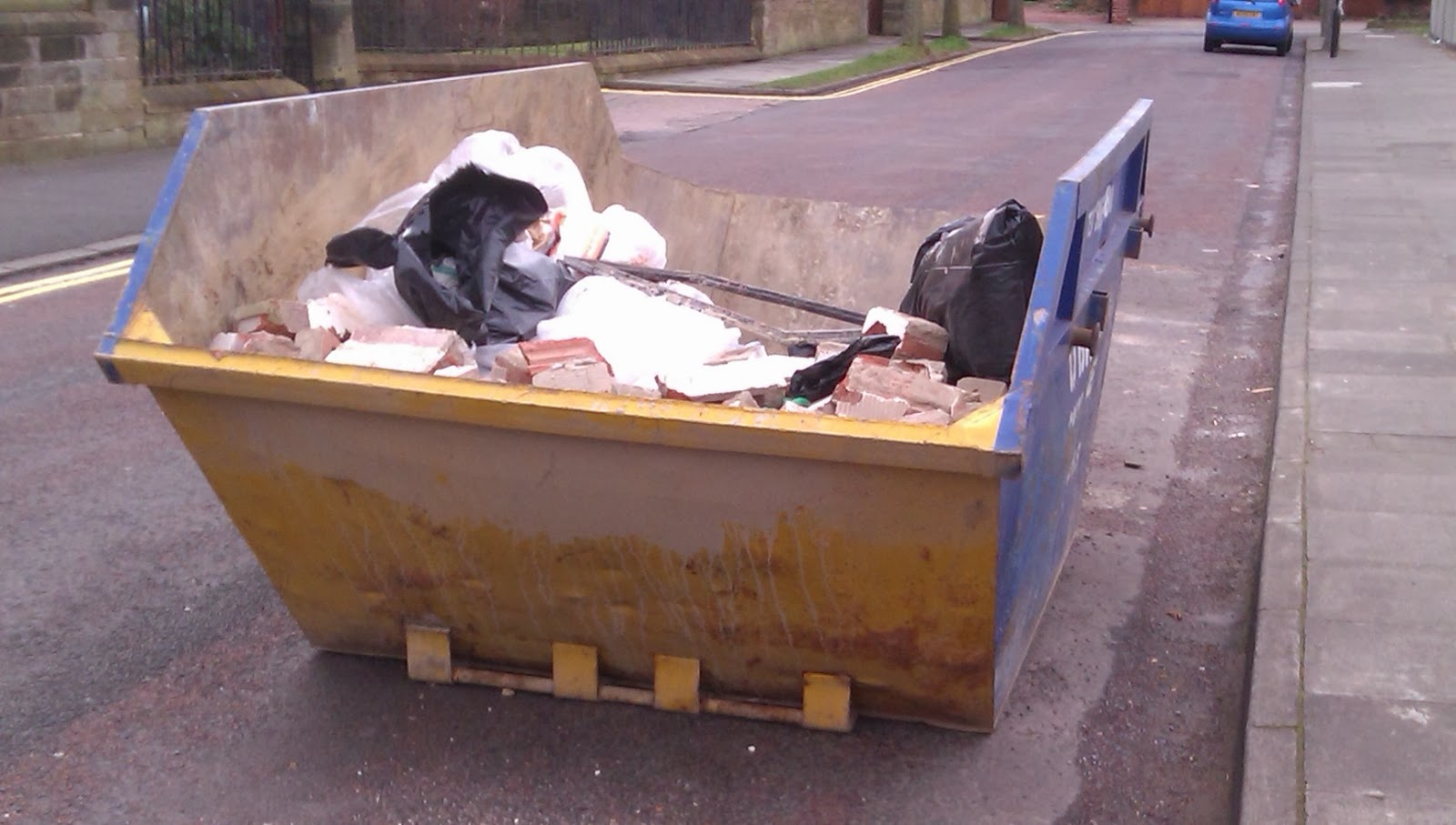

There is a widely known phenomenon that when a skip appears in a street, people start to empty their garages. They haven't done it for years (they haven't got a 5S strategy in place, for example), but the skip stimulates action.

In a business, when we experience a problem, we have the opportunity to take advantage of more than one change project at a time. Like the skip, if the change is already taking place there is often less resistance to us adding in one or two other bits while we're at it.

Like my computer, where I took advantage of having to make a change by adding in other changes that have already benefited me, we can do the same at work. Whether the continuous improvement change we are making is stimulated by us, or by circumstances, it may be a fantastic opportunity to throw in a few other related changes at the same time.

This approach makes sense for mechanics at the local garage, it unfortunately works for people who hire skips, and it can also work for us if we are involved with continuous improvement projects.

What small upheaval can you use to get more of your improvement projects moving right now?


Giles Johnston
Author of 'Business Process Re-Engineering', a practical plan to improve business performance.

Comments

Popular posts from this blog

The Kaizen Checklist is here!

Do you want to get better results from your Kaizen programme? Improve your business results quickly with my downloadable kit (including guidebook, workbook and templates) for only $39. Are you looking for a sustainable way to identify and implement improvements across your business? Practical improvement strategies The Kaizen Checklist is a downloadable kit that you can use with your management team to develop a system that suits your business and allow you to quickly implement Kaizen effectively at your place of work. This works great if you use it as the centre piece of your own internal workshop. The kit includes a 40 page guidebook, a workbook, four appendices and three templates. All parts of this kit are designed to get you up and running as fast as possible. If you are unfamiliar with Kaizen, let me stress that this is a simple improvement philosophy that is so much more than just  ‘a Japanese word for continuous improvement’. I’ll cover what it...

How to get started with continuous improvement

We all know that continuous improvement is a strategy that is essential for business. It involves constantly seeking ways to improve processes, products, or services in order to achieve better results and outcomes. However, for many people, the thought of starting on the path of continuous improvement can be daunting. The fear of doing it incorrectly or not knowing where to start can be overwhelming.    The key to successful continuous improvement is to start small and gradually build upon your successes. Here are some tips to help you get started if you are unsure of how to begin:   1. Identify areas for improvement: The first step in continuous improvement is to identify the areas that need improvement. This can be done by looking at the processes, products, or services that are not performing as well as they could be. It is important to involve all stakeholders in this process to gain a comprehensive understanding of the areas that need attention.   2. Set specifi...

Nail the number one improvement project

Over the past few weeks I have intervened in my client's continuous improvement programmes . I did this for one good reason: They weren't getting results. They caught the improvement bug, like so many organisations do. They got caught in the trap of wanting to change everything now! As I said, this happens to most of us from time to time. You start with some small improvements and you then identify more improvements you could get your teeth into. The next thing you know, you are trying to run ten improvement projects as well as deliver your day job. I know from bitter experience that this usually leads to having lots of loose ends rather than tangible increases in performance. So, what can you do about this? I know that with careful experimenting and resource management, you could find your sweet spot and figure out how many projects you can handle at once. Or, you can take the quick route and pare back your list until you have one priority. The one project that will give you t...